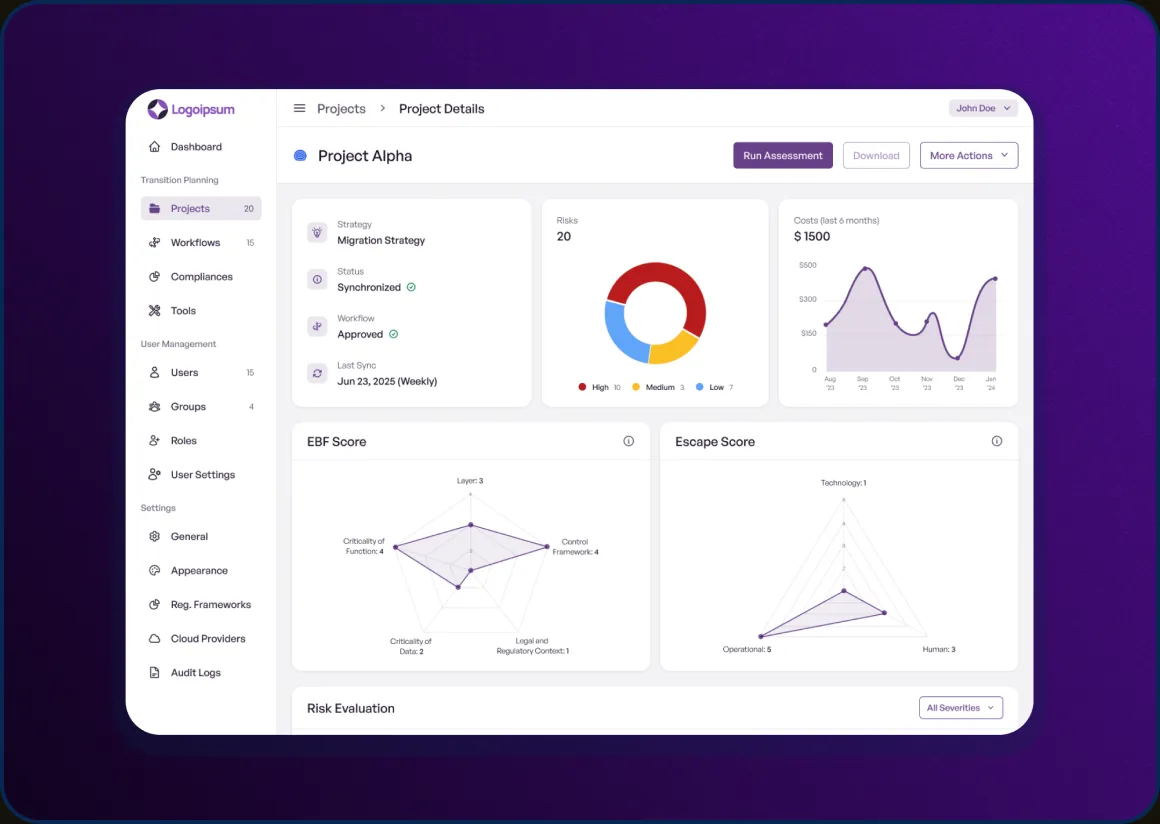
Cloud Exit & Compliance Platform
How we helped make it easier for financial institutions to exit cloud service providers
How we helped make it easier for financial institutions to exit cloud service providers. Product and interface design for an enterprise web app helping financial institutions manage cloud exit and compliance workflows.

Confidentiality Notice
This case study has been adapted to respect NDA obligations. Product names, visuals, data, and identifying details have been anonymized or modified. The focus is on design thinking, process, and problem-solving approach.
Introduction
Many regulated organizations rely heavily on cloud providers to operate critical systems. Over time, vendor lock-in, rising costs, and regulatory pressure create the need for structured exit planning.
However, exiting a cloud provider is not a simple technical switch. It requires coordinated risk assessment, compliance alignment, workflow approvals, and cross-team visibility. Without clear structure, the process becomes slow, error-prone, and difficult to manage.
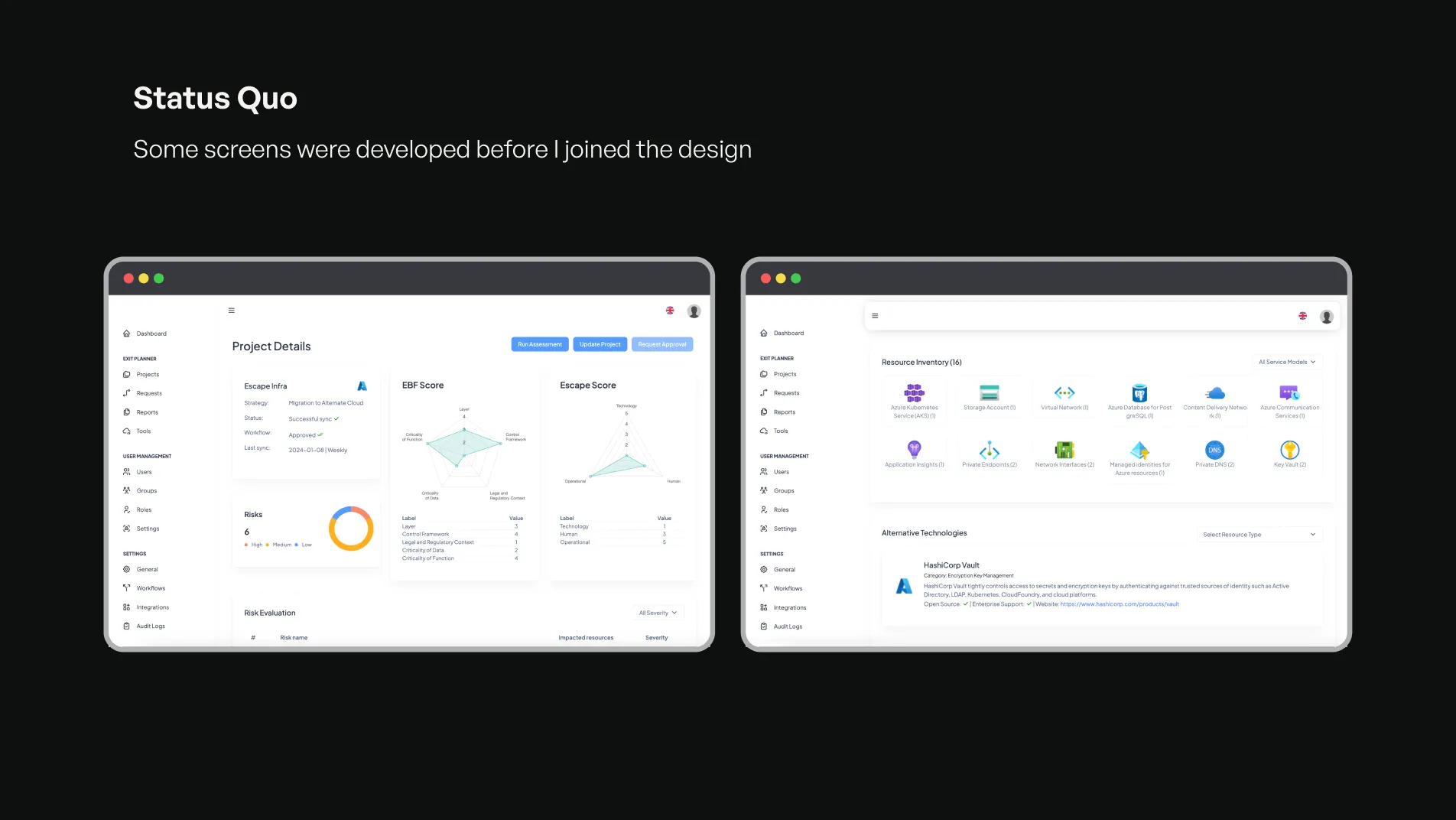
This platform was designed to help organizations evaluate cloud exit risks, manage regulatory requirements, and create structured transition strategies.
Initially, I was brought in to redesign key screens for an early MVP. As the product matured, I expanded the scope to help shape the broader experience, refine core workflows, and build a scalable design foundation.
Challenges
The main challenge that financial institutions are struggling is the complexity of creating an exit strategy for exiting their cloud services. Aside from this, more of the following user challenges were identified.
- How might we make compliance guidelines easier to understand and act on?
- How might we simplify workflows to save time and reduce manual effort?
- How might we help users manage resources more effectively for compliance tasks?
Design Process
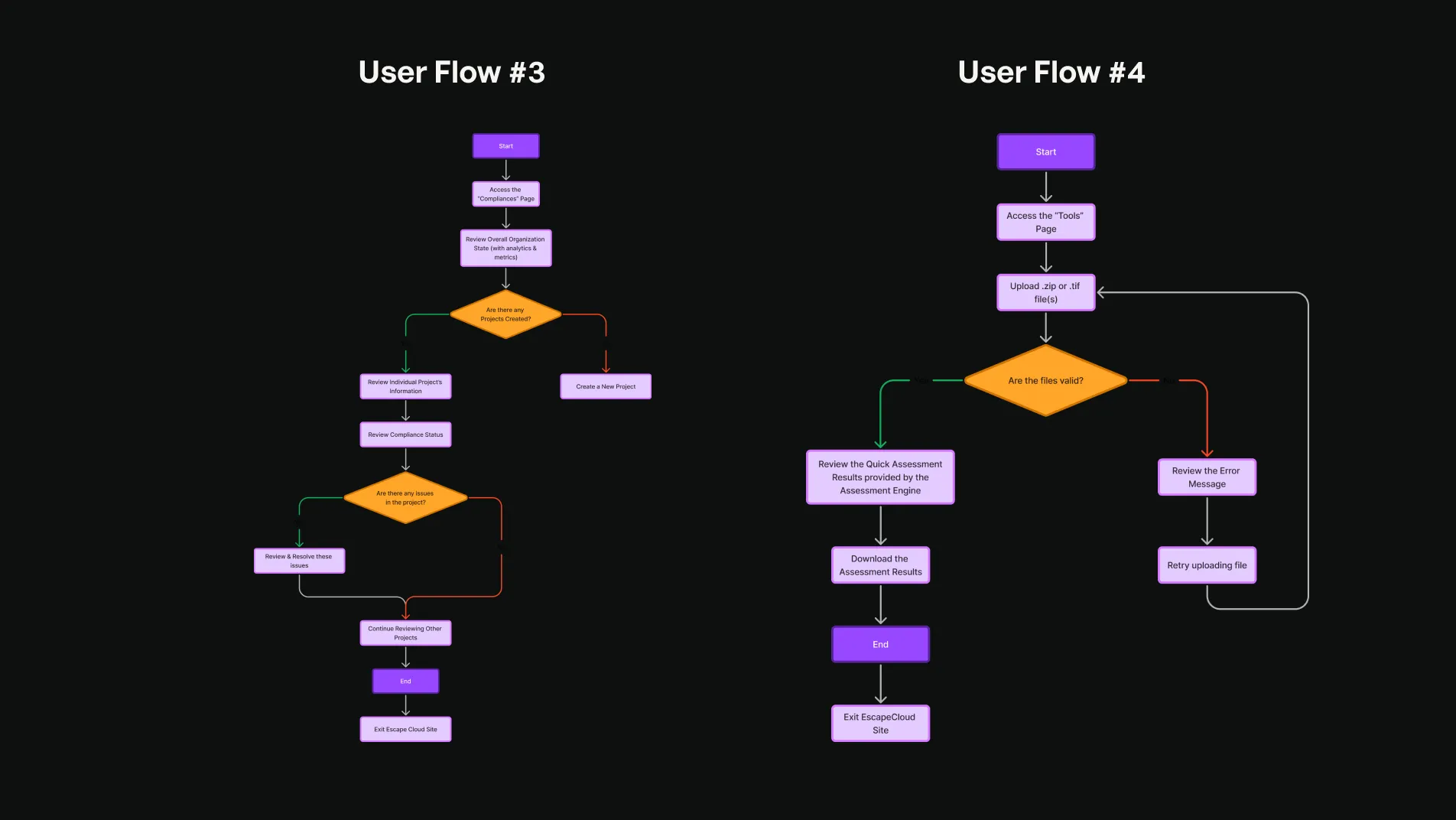
01. Mapping out User Flows
We mapped out user flows to identify gaps and simplify complex compliance and cloud exit processes.
User Flows
- Creating a project and setting the cloud service provider credentials
- Requesting approval of a project (including the Approve / Reject workflows)
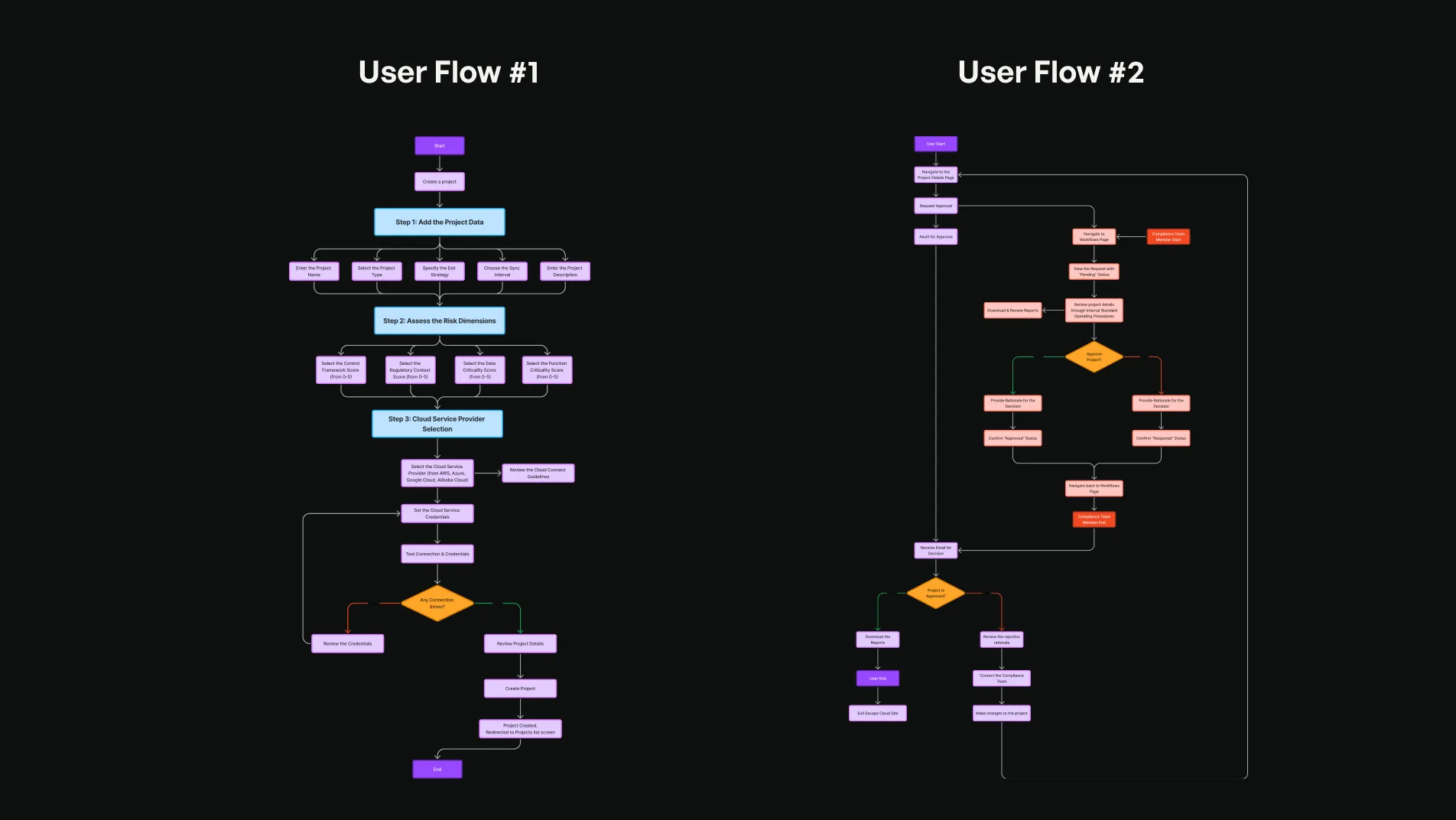
- Reviewing overall state of the organization in "Compliances"
- Perform a manual cloud exit assessment
02. Crafting Targeted Solutions
We developed and prioritized solutions that balanced user needs, feasibility, and business impact. Following solutions were worked on:
- Seamless Project Creation & Management
- Manage and Create Workflows
- Manage Compliance & Regulatory Frameworks
- Managing Workflows
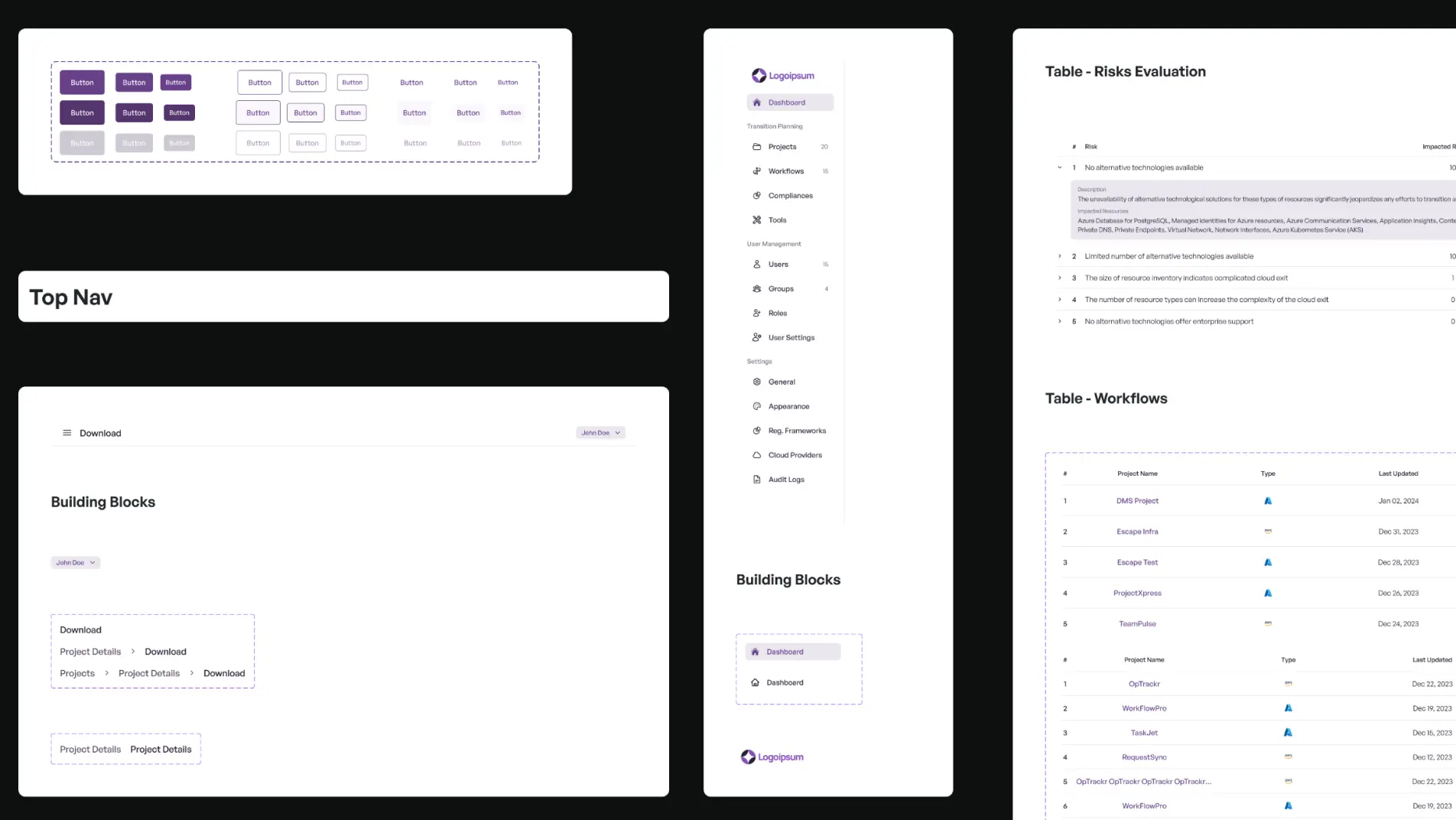
03. Enhancing Design System
We updated and maintained the design system by creating reusable components and documenting their specifications. Components included were Buttons, Sidebar, Top Navigation, Table, Modals and more
Solutions
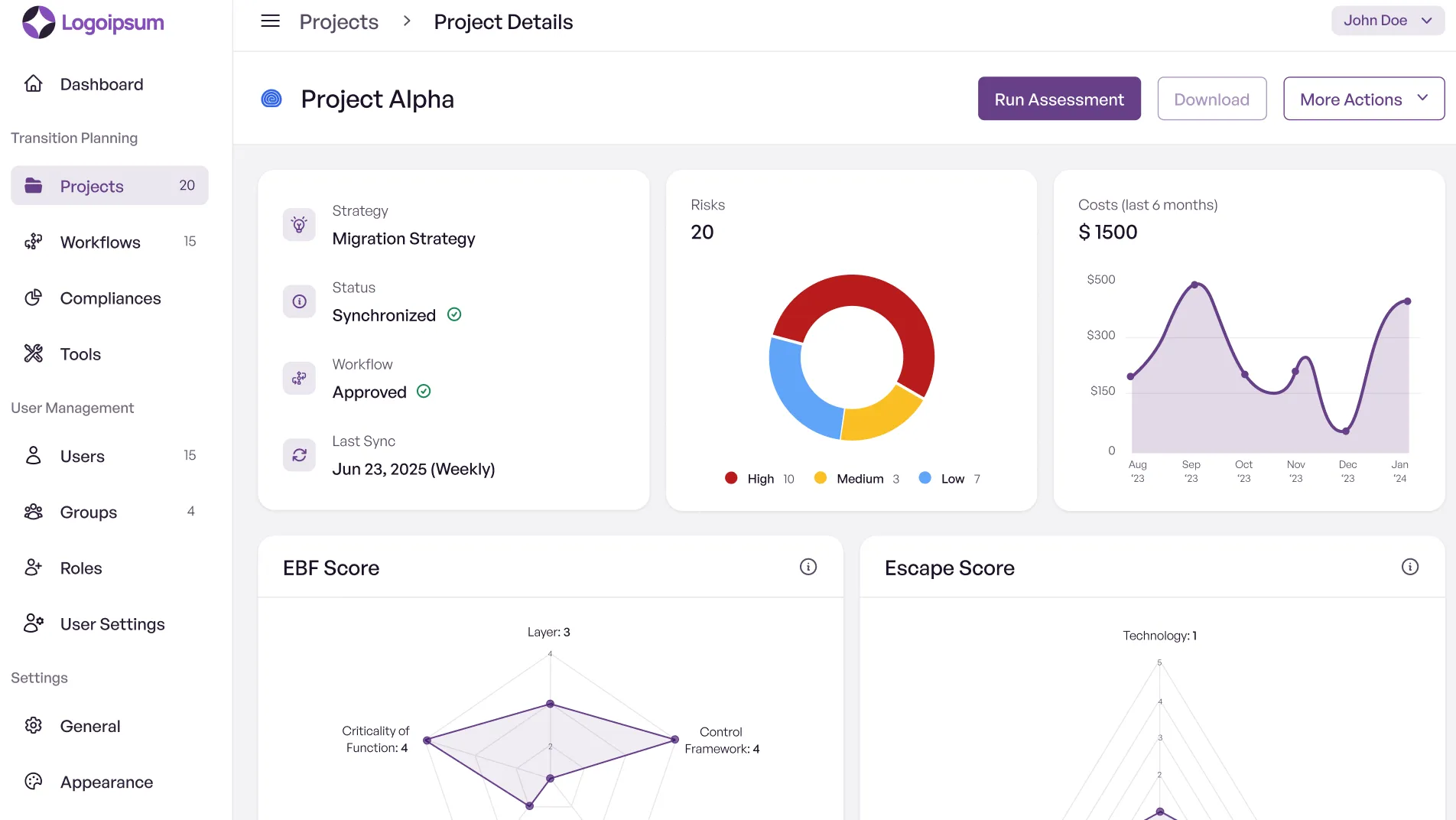
Project Details
Managing resources is hard when you're juggling multiple demands. This screen simplifies it by giving a clear view of resource availability, risks, and costs so users can make decisions confidently.
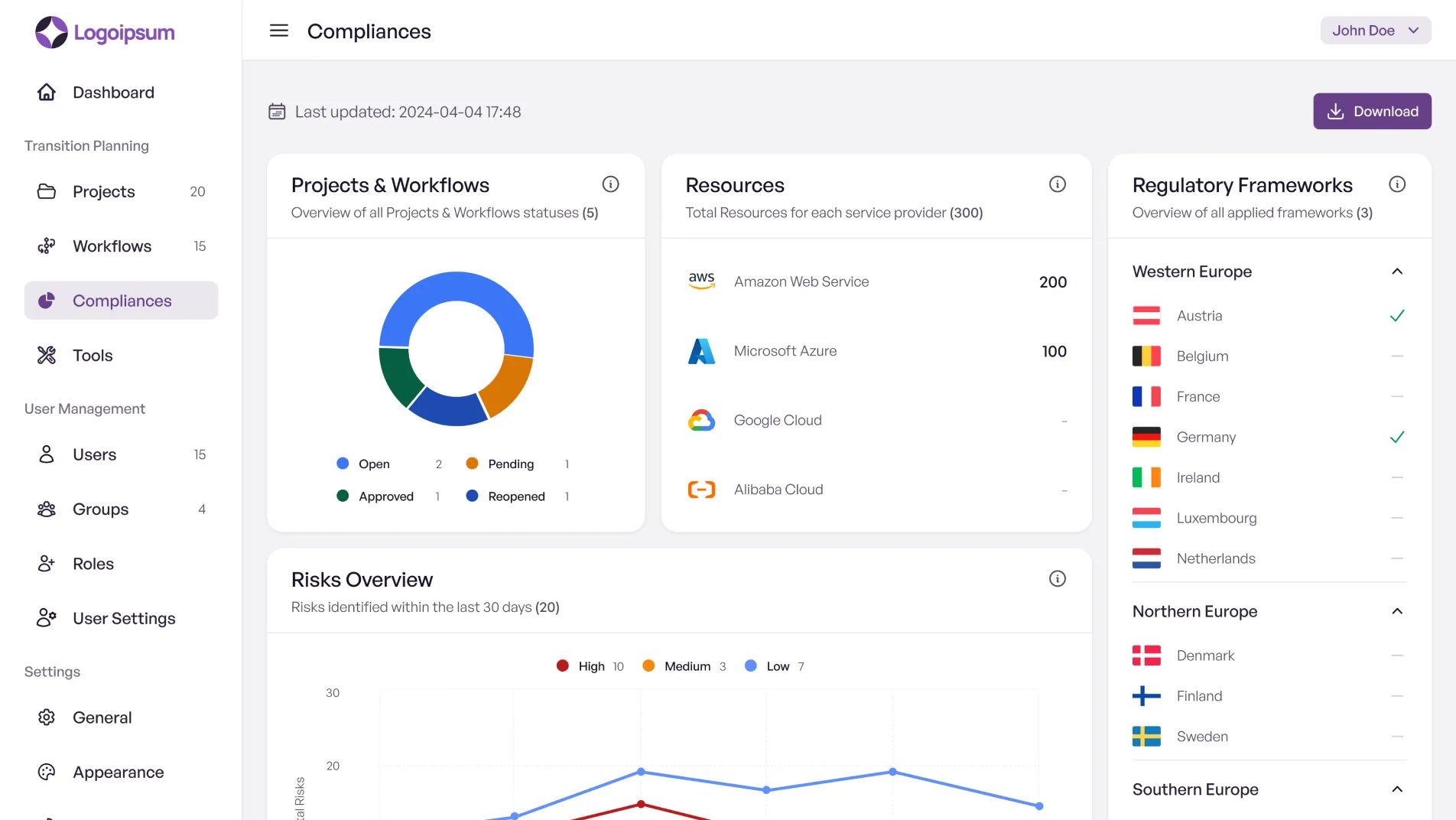
Compliances
Managing resources is hard when you're juggling multiple demands. This screen simplifies it by giving a clear view of resource availability, risks, and costs so users can make decisions confidently.
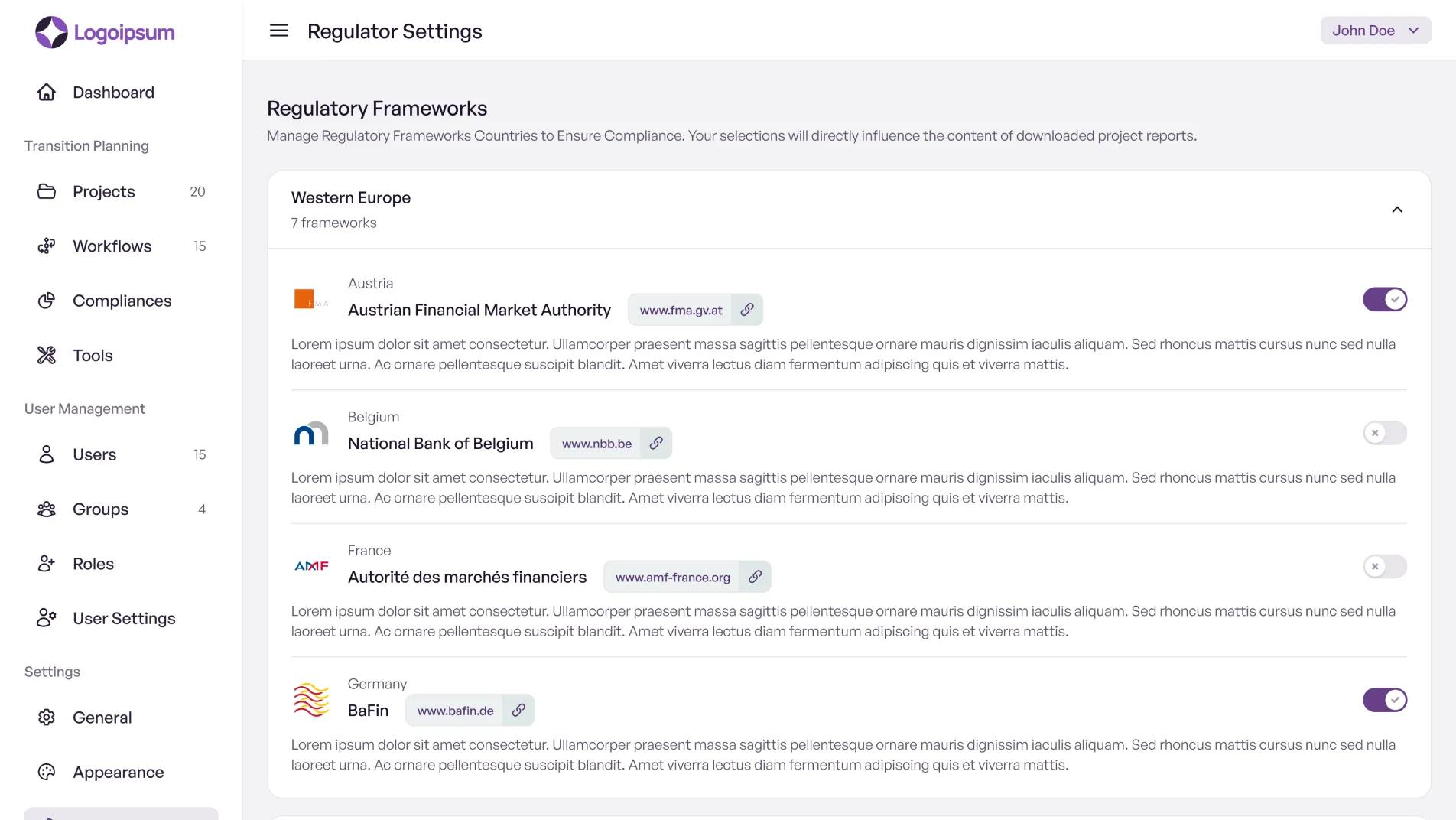
Regulatory Settings
Interpreting complex compliance frameworks can be confusing. This screen provides a structured and centralized way to manage regulatory requirements, helping users maintain clarity and focus.
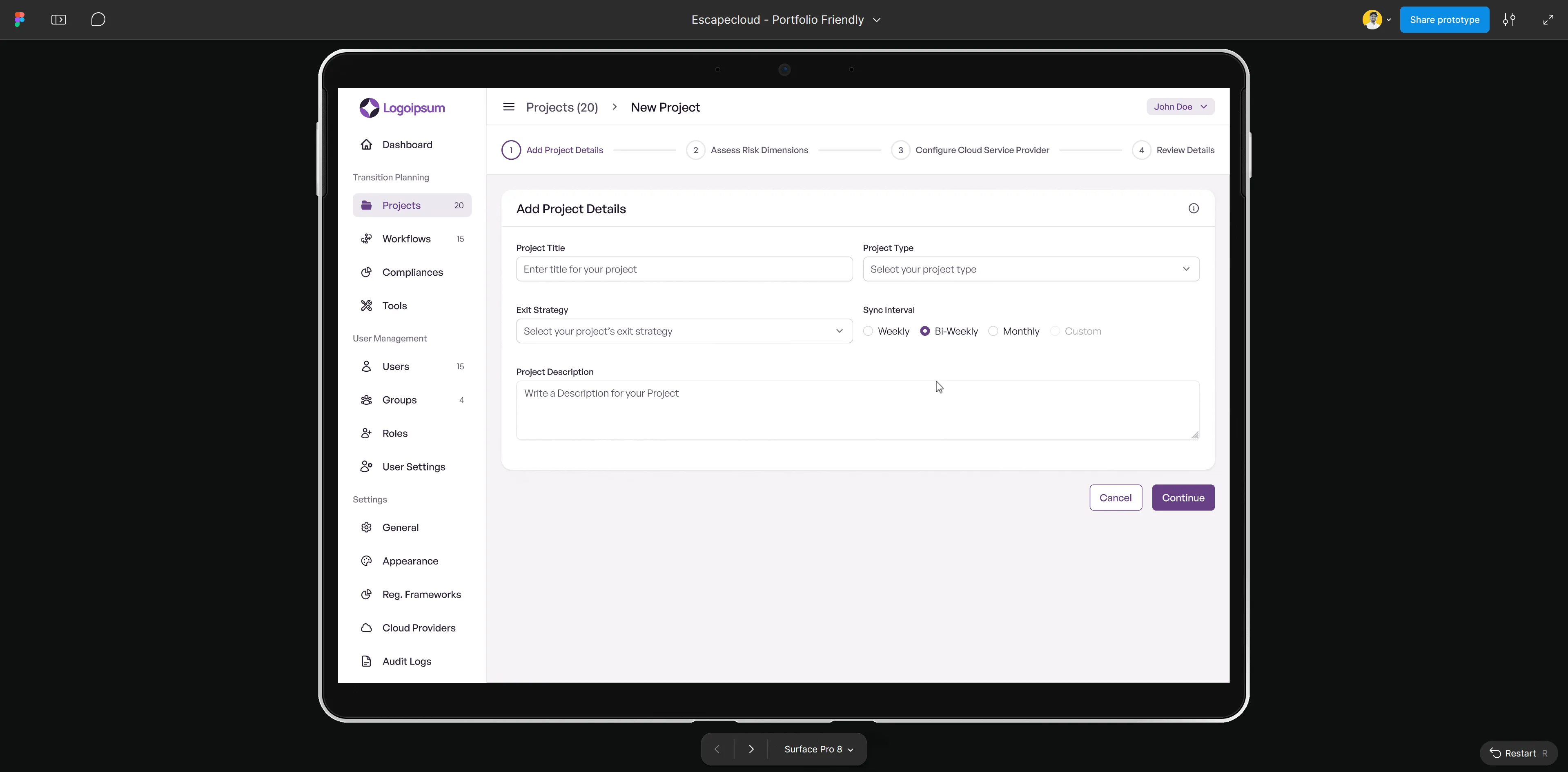
Create a Project
Starting a project can be time-consuming and messy. This streamlined process guides users step-by-step, saving time and avoiding errors. Click on “View Prototype” to see how it works.
What I Learned
Working on this project taught me the importance of balancing user needs with technical and business constraints. I learned how crucial it is to simplify complex workflows, especially for tasks like compliance management, where clarity and efficiency are everything. Collaborating with stakeholders helped me see how design can bridge gaps between users and technology, turning overwhelming processes into something approachable. Most importantly, I realized that good design isn’t just about aesthetics—it’s about creating solutions that empower users and make their work easier.