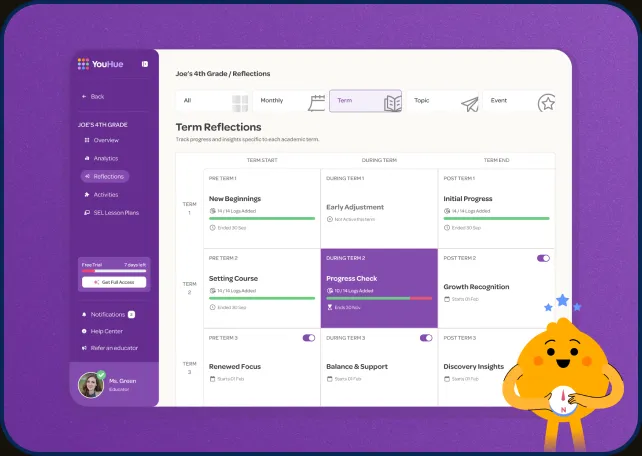
YouHue
How we helped create contextual mood check ins for students across different schools
How we helped create contextual mood check ins for students across different schools. Ahmad served as UI designer on web and tablet apps for student wellbeing and reflection workflows.

Introduction
YouHue is a K-12 emotional intelligence platform serving hundreds of schools. It enables students to reflect on their emotions and experiences while giving educators real-time insights into their students' wellbeing and growth.
The platform's core strength is its daily reflection model—students can check in throughout the day to process how they're feeling. However, educators quickly identified a critical gap: single emotion snapshots don't reveal patterns. A student might feel confident one moment but anxious the next. Their resilience might look different over a month than it does in an hour. And their emotional response to academic challenges might differ from their response to social situations.
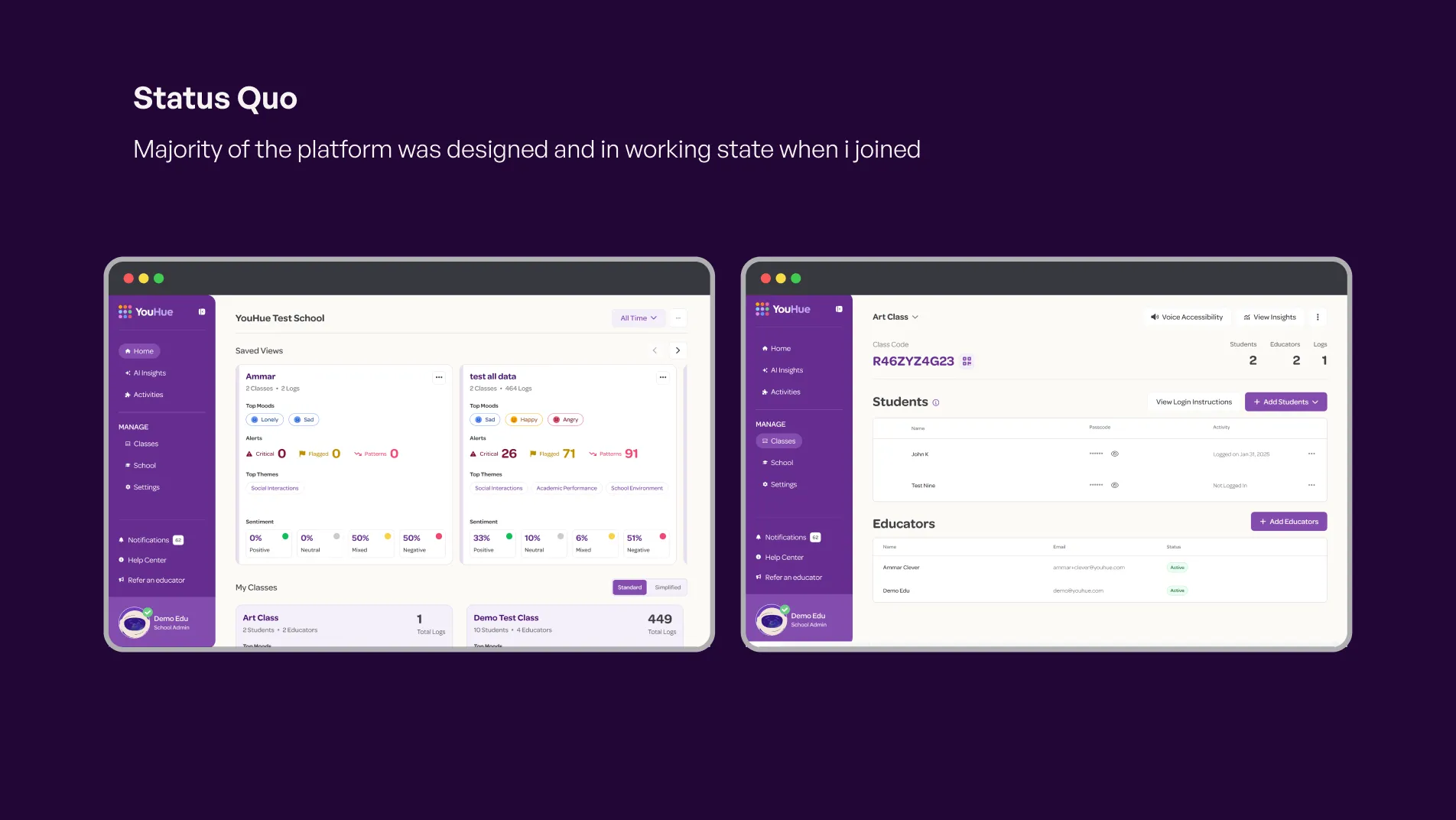
I joined YouHue as a designer tasked with solving this limitation. The challenge: design a flexible reflection system that captures emotions across different timeframes and contexts—monthly growth arcs, term retrospectives, topic-specific reflections, school events—without overwhelming students or educators.
This led to Multi-Dimensional Reflections, a system that transformed how educators understand their students' emotional journeys across time and context.
Challenges
The core challenge that the educators faced was that the daily reflections captured isolated emotions, but meaningful insights required understanding patterns across time and context. This created fiction in how educators could better understand and truly support students.
Beyond this central constraint, several interconnected user challenges emerged:
- How might we prevent reflection fatigue while still capturing data across multiple contexts and timeframes?
- How might we surface emotional patterns and trends to educators in a way that would be immediately actionable and not overwhelming?
- How might we maintain a consistent, intuitive student experience across multiple reflection types (daily, monthly, term-based, etc.)?
Solutions
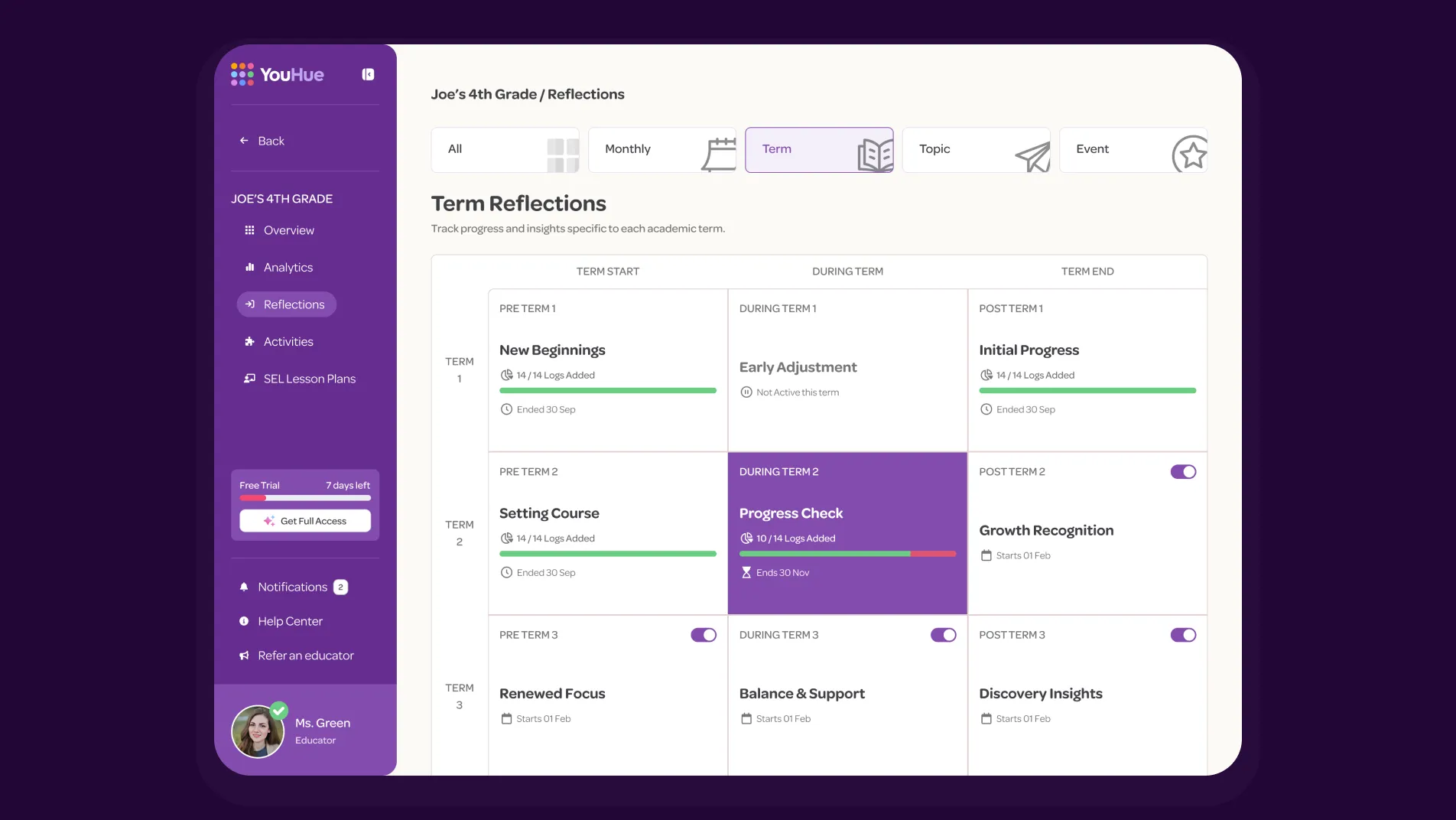
Contextual Based Overviews
Reflections organized across multiple dimensions—monthly, term-based, topic-specific, and event-driven—let educators create contextual check-ins while students experience a consistent interface.
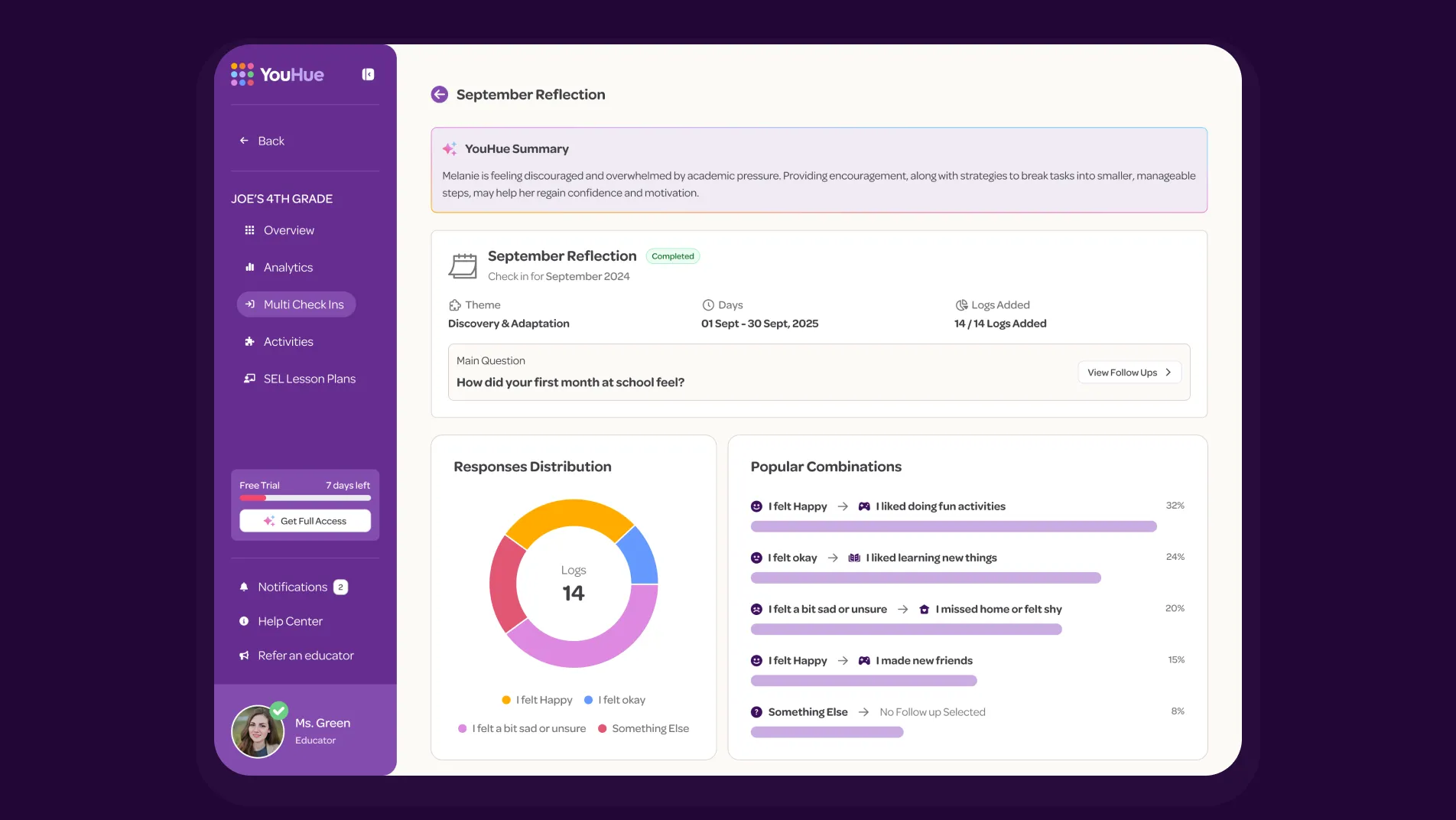
Actionable Reflection Insights
Reflections organized across multiple dimensions—monthly, term-based, topic-specific, and event-driven—let educators create contextual check-ins while students experience a consistent interface.
Guided Student Reflection Flow
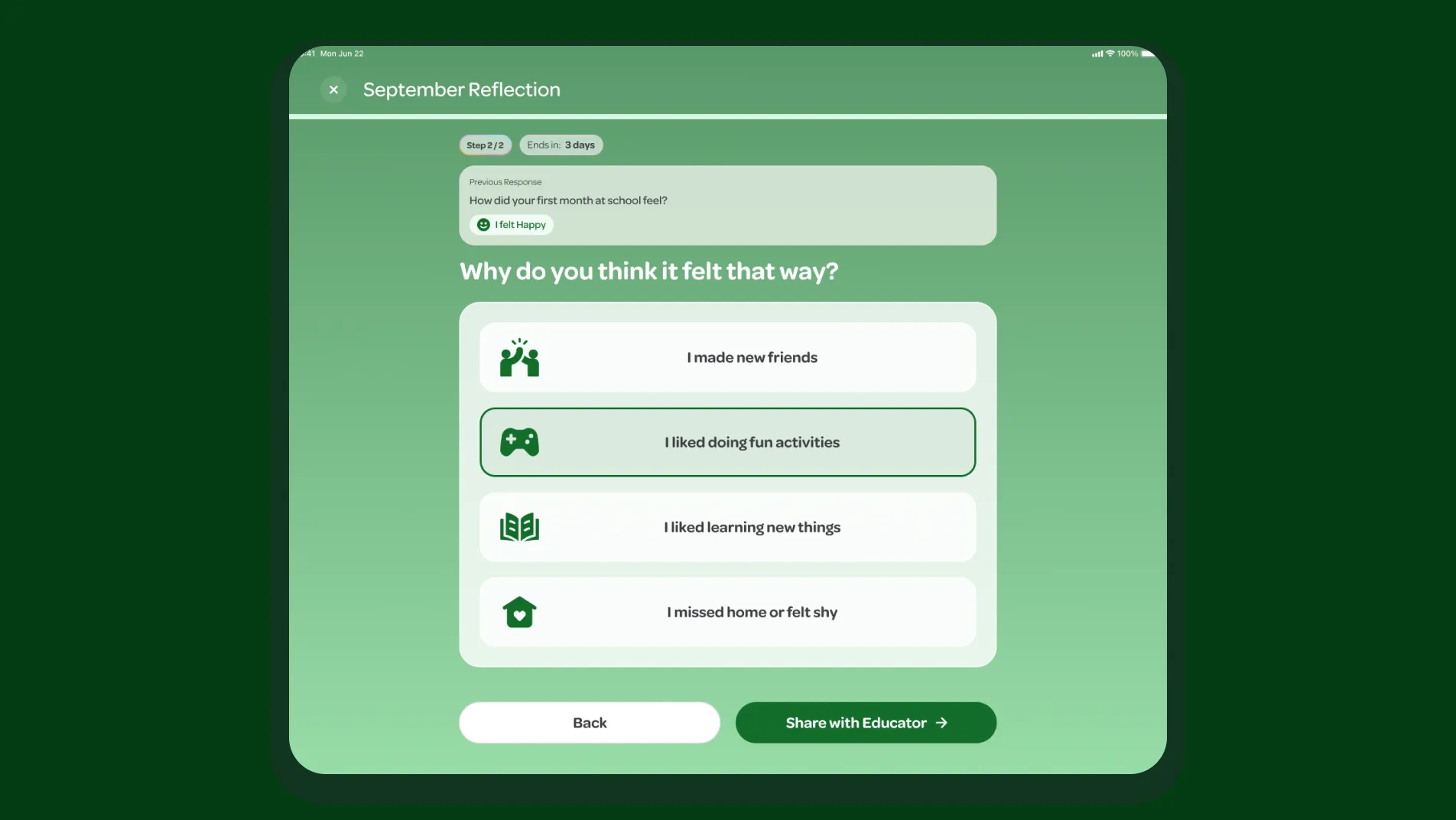
A multi-step reflection guide helps students articulate emotions beyond a single feeling. Follow-up questions deepen thinking, while visual icons and simple language make responding intuitive.
What I Learned
Working on Multi-Dimensional Reflections taught me that emotional data becomes actionable only when it's contextualized. A single data point tells you nothing; patterns across time and context tell the whole story. I learned how critical it is to balance educator flexibility—letting them create custom reflections—with student simplicity, ensuring the experience never feels fragmented or overwhelming.
Designing for two distinct users with opposing needs (educators wanting depth, students wanting clarity) forced me to think systematically about information architecture. I realized that good design in edtech isn't about adding features—it's about thoughtful constraints that make complex emotional understanding feel natural for both sides. Most importantly, I learned that reflection tools aren't just about data collection; they're about building trust and dialogue between students and the adults who support them.